



Field Note: Night in Botswana
In the conservation tourism areas of Botswana, there’s a very diffuse separation between safari area and where people live. Animals and people move through the same spaces in a way that feels less cordoned off than in higher-density tourism areas in other parts of Africa. This brings lots of caution into the culture. In spite of the extremely low rates of crime, walking around, especially in the dark, is highly discouraged, and even in areas with obvious human density and presence, you can hear hyenas calling into the night.
On a night drive in Kasane, close to the Botswana/Zimbabwe border, we pass the migration corridor along Hwange National Park that elephants use to cross to and from Botswana in search of water during dry periods. When moving between patches of natural habitat, elephants often travel at night. For now the area is devoid of them, the rains in Botswana have been abundant, and the air feels still, punctuated by large trees casting dark shadows on a ground painted silver by gentle moonlight from the quarter moon.
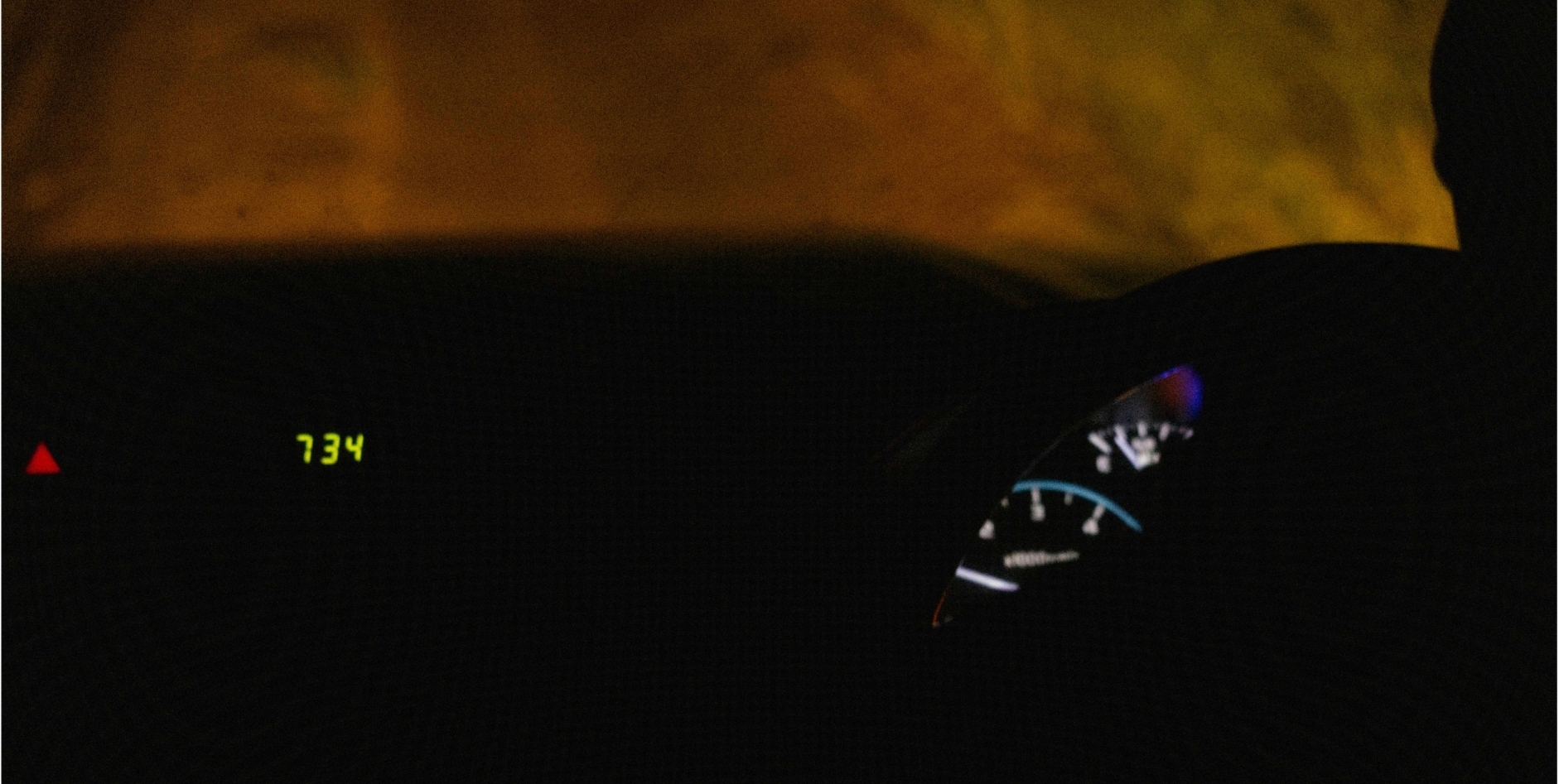
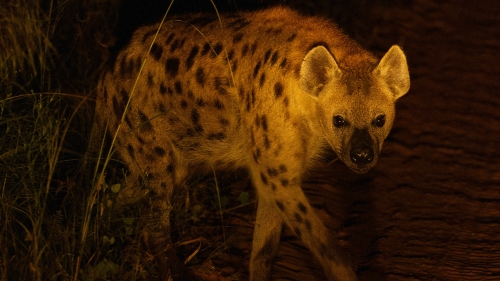
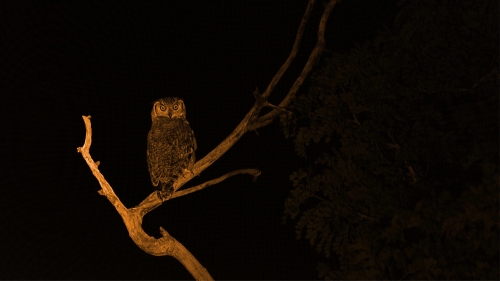
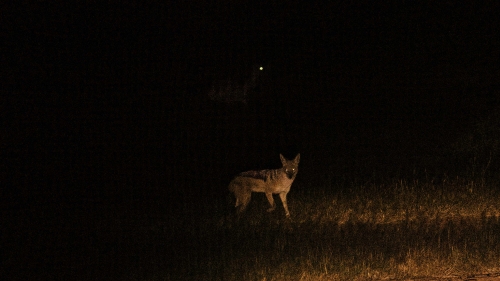
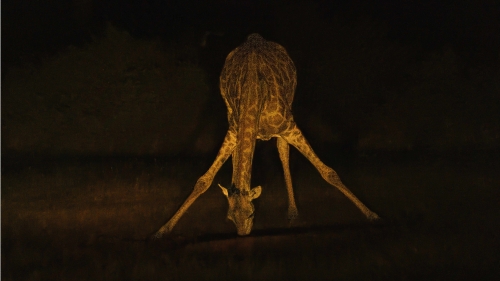
The landscape feels noticeably different. Part of this is due to the change in the human sensory experience – as it gets darker, we can’t see very far into the landscape, and while during the day your eyes would stretch out to find the horizon, at night we are limited to what’s immediately visible in the amber glow of the car headlights that tint everything slightly orange. Sightings are few and far between. The occasional hyena weaves in and out of the dirt road, apparently unperturbed by the roaring Land Cruiser engine. A cautious Spotted Eagle Owl is perched high on a branch. Dozens of impala far off the road are given away by their eyes reflecting the glow of the headlights, and a jackal bounds across the scene with energetic, determined steps. A giraffe crouches down to drink water from a pool, and it suddenly stopping and moving away alerts us to a lone hyena nearby.
It’s always thrilling to see so many of the creatures we can see during the day continue to be active at night, some of them perhaps even seeking the cover of darkness to avoid human eyes.
 |
 |
 |
 |